Faculty & Staff Profile
Scott Samuelsen
Professor Emeritus
MECHANICAL & AEROSPACE ENGINEERING
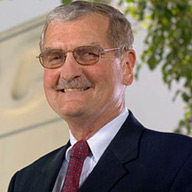
Samuelsen is the HORIBA Distinguished Emritus Professor, the founding director of the Advanced Power and Energy Program, and the National Fuel Cell Research Center. He has a joint faculty appointment in the department of Civil and Environmental Engineering.
B.S., University of California, Berkeley, Mechanical Engineering, 1964
M.E., University of California, Berkeley, Mechanical Engineering, 1965
Ph.D., University of California, Berkeley, Mechanical Engineering, 1970
Samuelsen’s research focus is directed toward energy conversion, fuel cells, combustion, fuel sprays, laser diagnostics, air quality, turbulent transport, alternative fuels, the modeling of reacting flows, practical energy systems, and the conflict between energy and the environment. Samuelsen pioneered the development of octane posting with the Federal Trade Commission and is responsible for the popular (R+M)/2 posting methodology that anchors today both engine design and fuel formulation. He leads pioneering research in the development, field demonstration, and commercialization of fuel cell/gas turbine hybrid systems, fuel cell tri-generation technology, lean-burn gas turbine technology, microgrid control, plug-in fuel cell electric vehicles, hydrogen fueling infrastructure, and electric vehicle-to-home electricity transfer. Samuelsen has published over 300 peer reviewed archival publications and conference proceedings and was recognized by President Obama in 2011 as a “Champion of Change.” In 2010, he received the UCI Medal for his contributions to energy and the environment.
Research Topics: Combustion, sprays, laser diagnostics, air quality, turbulent transport, alternative fuels, modeling reacting flows, practical systems, energy and environmental conflict.